
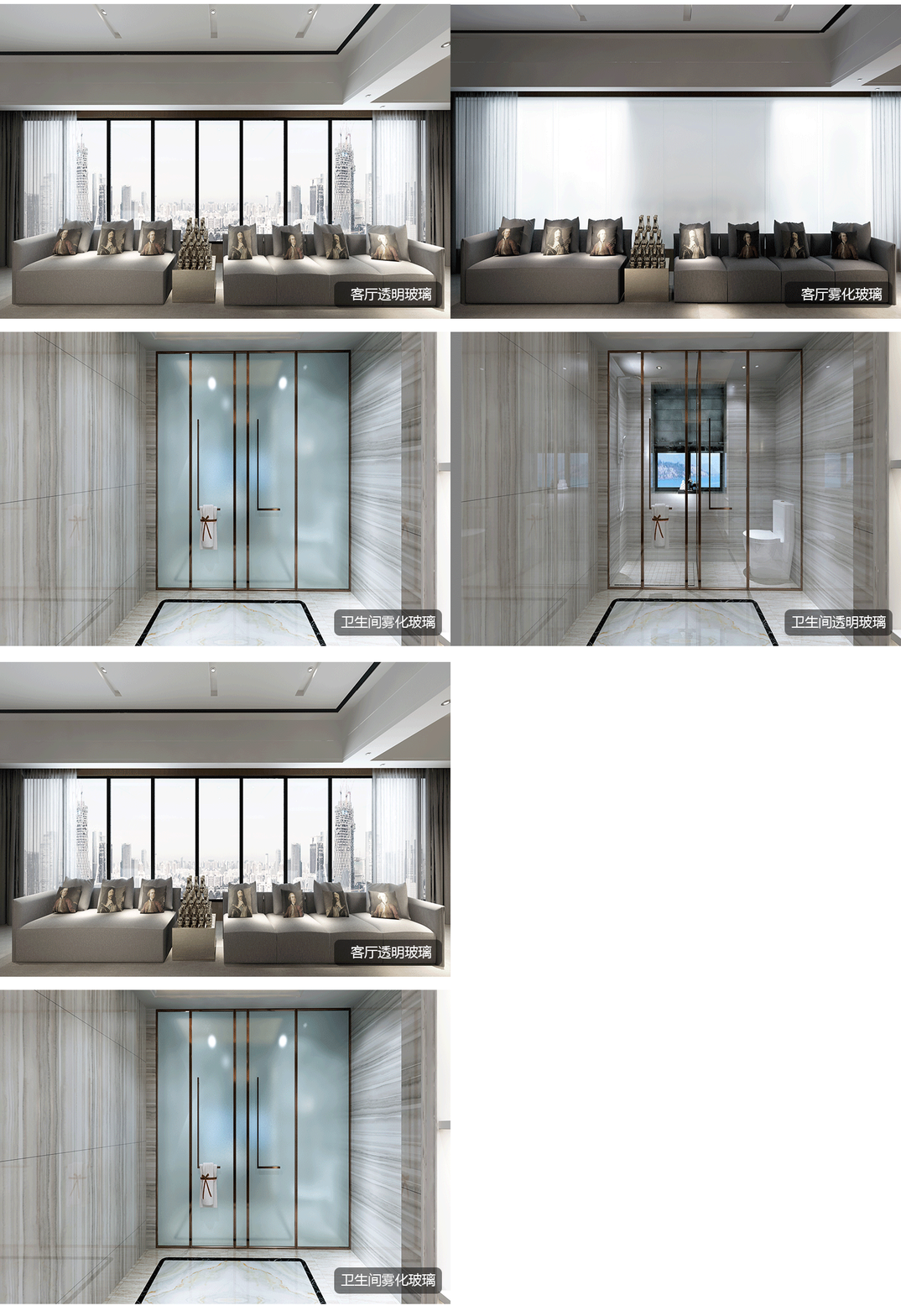
Polymer-Dispersed Liquid Crystal (PDLC) Smart Film has emerged as a transformative technology in modern architecture and automotive design, enabling dynamic privacy control and enhanced energy efficiency. Capable of switching between transparent and opaque states via an electric current, this technology offers exceptional versatility for windows, partitions, and display applications. However, while low-cost alternatives may appear attractive, they often mask serious long-term consequences that can negate initial cost savings and compromise user satisfaction. This article examines the multifaceted implications of choosing inexpensive PDLC(Polymer Dispersed Liquid Crystal) Switchable Film over high-quality products.
📉 Performance Degradation and Functional Limitations
Cheap Dimmable Films often utilize inferior liquid crystal materials and substandard manufacturing processes, leading to accelerated performance degradation. Over time, the alignment stability of the liquid crystal molecules diminishes, resulting in the following issues:
Reduced optical clarity: Even in the transparent state, low-cost films may develop permanent haze, blocking up to 30% of natural light transmission and compromising clarity.
Slower response times: The switching time between transparent and opaque states can extend from milliseconds to several seconds, undermining the seamless user experience expected of smart glass technology.
Uneven opacity: Irregular liquid crystal distribution often causes the dimming effect to appear patchy or inconsistent—particularly noticeable on large panels—thereby reducing the film’s effectiveness in ensuring privacy.
Environmental factors such as temperature fluctuations, UV radiation, and humidity exacerbate these issues, accelerating the deterioration of inferior materials. In contrast, high-quality PDLC films utilize UV-resistant polymers and advanced alignment technologies to maintain performance for 10 to 15 years, whereas low-cost alternatives typically last only 3 to 5 years.
🔌 Increased Energy Consumption and Operational Costs
Although low-cost Smart Films have a lower initial purchase price, their long-term energy costs are often significantly higher. The reasons for the poor energy efficiency of these low-cost smart films include:
Higher power requirements: Due to suboptimal electrode design and the use of materials with inferior conductivity, low-cost films often consume two to three times as much power as high-quality smart films to achieve the same level of opacity.
Voltage instability: Inferior electronic components may require frequent voltage adjustments to maintain performance; this not only increases energy waste but also raises the risk of electrical failure.
For commercial and residential projects utilizing Switchable Film (Smart Film Factory) on a large scale, this inefficiency can result in hundreds or even thousands of dollars in additional annual energy expenses. Over the long term—such as a ten-year period—the cumulative energy costs associated with low-cost PDLC materials can easily exceed the initial price difference between high-quality and low-cost systems.
🛠️ Frequent Repairs and Replacement Costs
The most significant long-term costs associated with cheap Magic Films stem from durability issues and ongoing maintenance requirements. Low-cost switchable films are more prone to the following problems:
Adhesion failure: Inferior adhesives are liable to peel or bubble—particularly in high-humidity environments or areas with significant temperature fluctuations—often necessitating expensive re-installation or complete replacement.
Physical damage: Thin, unprotected film layers are more susceptible to scratches, impact damage, and yellowing caused by UV exposure, all of which compromise aesthetics, light transmission, and functional performance.
Electrical component failure: Cheap wiring and control systems are more prone to malfunction, leading to frequent repairs or the need to replace the entire smart glass system.
For instance, a comparative analysis of the Total Cost of Ownership (TCO) over a 10-year period reveals that while high-quality PDLC films carry a higher initial price tag, they offer far greater overall value. Consider a 10-square-meter installation: cheap PDLC(Polymer Dispersed Liquid Crystal) Film ($20/m²) has an initial cost of $200, but when factoring in estimated energy costs ($900), replacement costs ($1,000 for two replacements), and repair costs ($300), the 10-year total reaches $2,500. In contrast, high-quality PDLC film ($50/m²) has an initial cost of $500, yet incurs only $400 in energy costs and $100 in repair costs, with no replacement required; the total cost over the same period is just $1,000.
🏭 Environmental Impact and Sustainability Concerns
The hidden costs of low-cost Smart Films extend beyond economics to encompass environmental sustainability. Throughout their lifecycle, these inexpensive films generate the following impacts:
Increased Waste: Poor durability necessitates frequent replacement, resulting in greater volumes of non-recyclable plastic waste, which exacerbates landfill pressure and causes environmental pollution.
Higher Carbon Footprint: The production of inferior PDLC films Factory often involves inefficient manufacturing processes and inadequate environmental safeguards, leading to higher greenhouse gas emissions per unit.
Resource Consumption: The frequent replacement of low-cost PDLC(Polymer Dispersed Liquid Crystal) systems drives up the demand for raw materials—including liquid crystals and rare-earth metals—further straining global resources.
High-quality PDLC Smart Films represent a more environmentally responsible choice, thanks to their extended service life and more sustainable production processes. Premium manufacturers (such as JiSu Smart Tech) also offer recycling programs for end-of-life products, thereby reducing the overall environmental impact of Smart Glass(Magic Glass) Technology.
💼 Conclusion: The True Cost of Cheap PDLC Smart Film
While low-cost PDLC Switchable Film may appear to be an attractive, cost-saving option in the short term, it is rarely the ideal choice for most applications when considering long-term factors such as performance, operating costs, and environmental sustainability. Expenses arising from increased energy consumption, frequent repairs, and premature replacement often far outweigh the initial savings. For businesses and property owners seeking reliable, high-quality smart film solutions, choosing a manufacturer that produces premium PDLC Smart Film(JiSu Smart Tech) offers greater value, a longer service life, and greater peace of mind—factors that are also crucial to maintaining long-term customer relationships.
Shenzhen JiSu Smart Tech , We are a high-quality manufacturer and the original factory—your best choice.
Post time: 6 月-22-2026