
🌟 Indoor LED Display: A Comprehensive Overview
Indoor LED displays are advanced flat-panel display systems that utilize light-emitting diodes (LEDs) as the core light source, designed specifically for indoor environments. They have revolutionized visual communication in commercial, institutional, and residential settings with their exceptional performance and versatility.
💡 Core Working Principle
At its essence, an indoor LED display consists of numerous tiny LED chips arranged in a grid. When an electric current passes through these chips, they emit light of specific wavelengths. By combining red, green, and blue (RGB) LEDs in precise ratios, the display can produce a full spectrum of colors. The brightness, contrast, and color accuracy are controlled by sophisticated driving ICs and display control software, ensuring seamless, high-quality image reproduction.
🎯 Key Advantages
- Superior Visual Quality: Boasts high brightness (adjustable to suit indoor lighting), ultra-high contrast ratios, and wide color gamut, delivering sharp, vivid, and true-to-life images even in well-lit spaces.
- Flexible Customization: Available in various sizes, resolutions, and form factors (from small wall-mounted units to large-scale video walls). Can be tailored to fit irregular spaces with modular designs.
- Energy Efficiency: Consumes significantly less power compared to traditional display technologies like LCDs, especially when displaying dark content, thanks to the self-emitting nature of LEDs.
- Long Lifespan: With an average lifespan of 50,000 to 100,000 hours of continuous operation, it offers exceptional durability and reduces maintenance costs over time.
- Seamless Integration: Supports multiple input signals (HDMI, DVI, SDI, etc.) and can be easily integrated with control systems, enabling remote management and content updates.
🏭 Common Applications
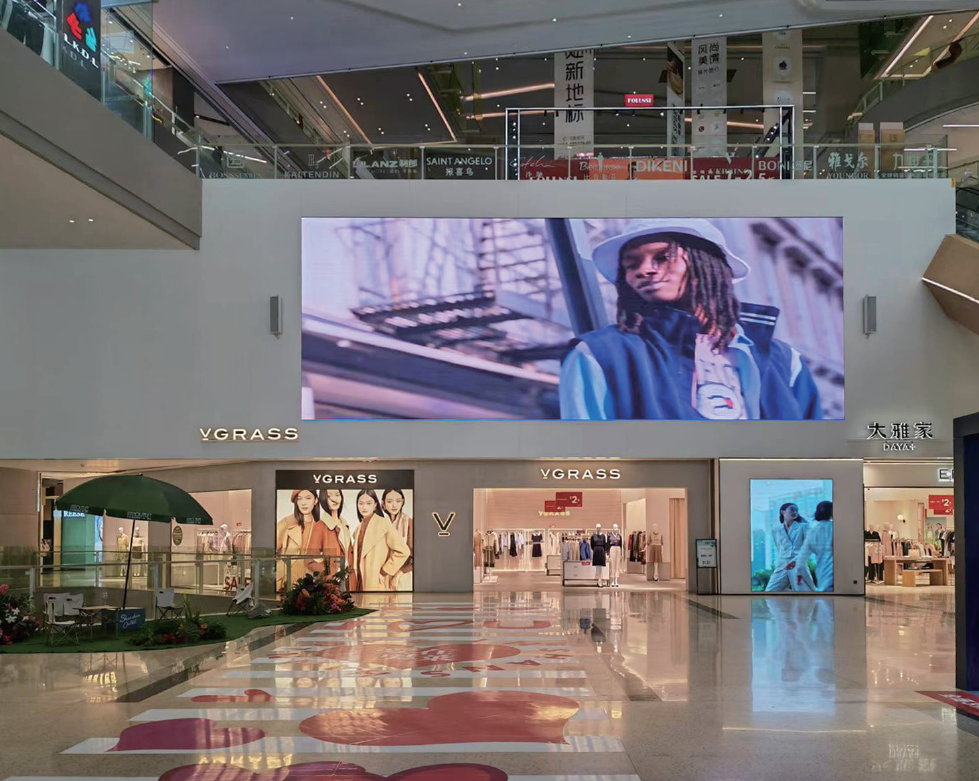
- Commercial Advertising: Used in shopping malls, retail stores, and restaurants to showcase products, promotions, and brand stories in an engaging way.
- Corporate & Institutional: Deployed in conference rooms for presentations, command centers for real-time data monitoring, and lobbies for wayfinding and information dissemination.
- Entertainment: Enhances the viewing experience in cinemas (as immersive side screens), theaters, and indoor amusement parks with dynamic visual effects.
- Education: Facilitates interactive learning in classrooms and lecture halls, making complex concepts more accessible through visual aids.
📌 Technical Specifications to Consider
When selecting an indoor LED display, key parameters include:
- Pixel Pitch: The distance between adjacent LED pixels, measured in millimeters (e.g., P1.2, P2.5). Smaller pixel pitch means higher resolution and better image clarity for close-up viewing.
- Refresh Rate: Determines the smoothness of moving images, typically ranging from 1920Hz to 3840Hz. Higher refresh rates eliminate motion blur and flicker.
- Viewing Angle: The maximum angle from which the display can be viewed without significant loss of image quality. Most indoor LED displays offer horizontal and vertical viewing angles of 120° to 160°.
- Brightness Level: Usually ranges from 500 to 1500 nits, adjustable to adapt to different indoor lighting conditions.
Summarize:
Clear, Bright, Stable, and Energy-Saving
Product Features:
1. Clear, bright, stable, and energy-saving
2. High refresh rate, high contrast, and beautiful image quality
3. Innovative driver protection design for enhanced stability and reliability
4. Ideal for performances, bars, conference rooms, exhibitions, etc.
Post time: 3 月-12-2026