
📌 What is Smart Glass?
Smart Glass—also known as Switchable Glass or electrically controllable color-changing glass—is a specialized type of glass capable of adjusting its transparency via electrical, optical, or thermal controls. It appears transparent when powered and becomes frosted (opaque) when the power is cut or under specific conditions. Combining light transmission with privacy protection, it serves as a core, innovative material for achieving smart building functionality.
⚙️ Core Technical Principles and Mainstream Approaches
Based on their control mechanisms and technical principles, switchable glass technologies are primarily categorized into four main approaches, each suited to specific scenarios and designed to meet the diverse needs of end-users:
🔹 PDLC (Polymer Dispersed Liquid Crystal) Technology
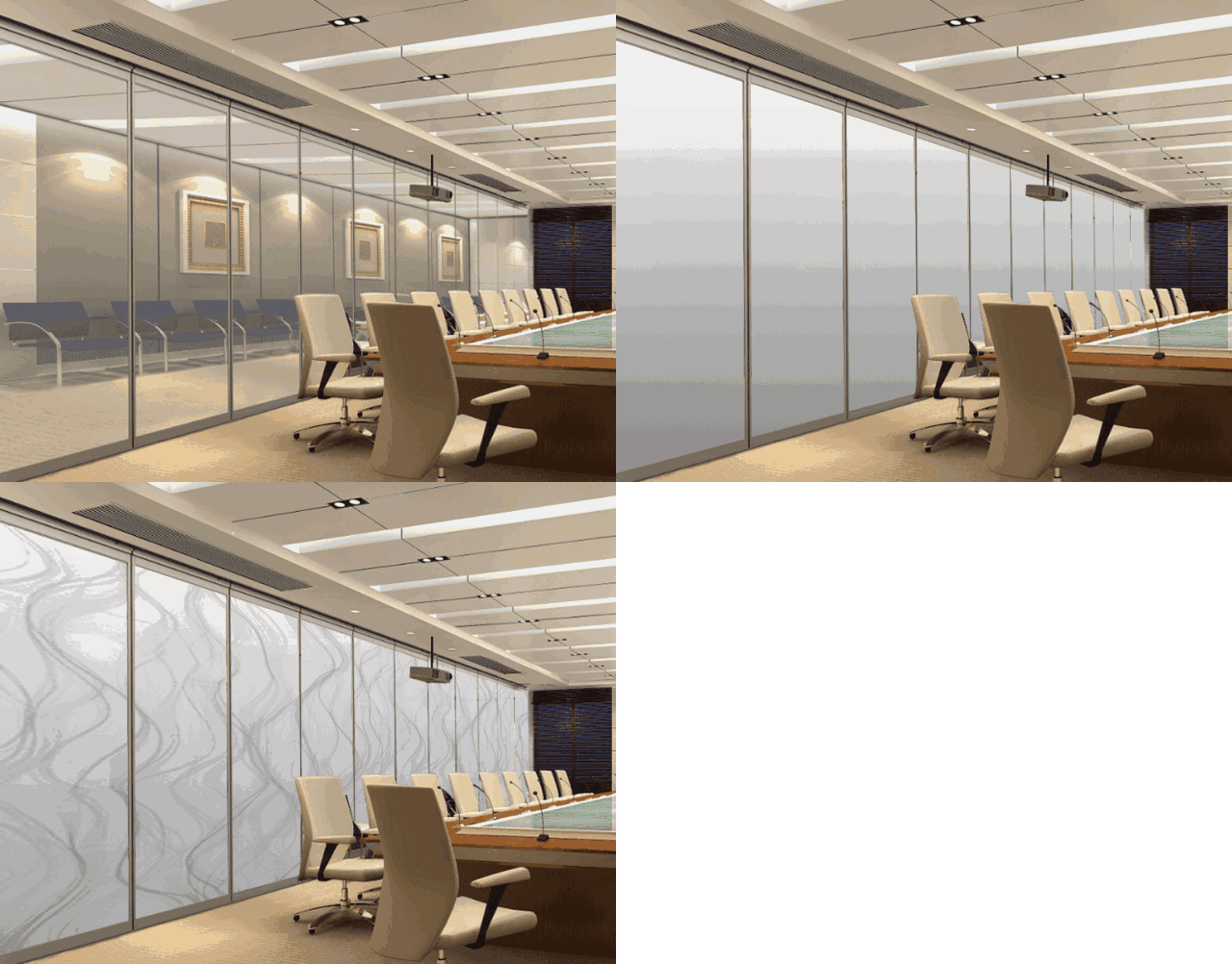
Principle: Liquid crystal molecules within the glass interlayer align in an orderly fashion when powered, allowing light to pass through smoothly; when power is cut, they become disordered and scattered, causing diffuse reflection and resulting in an opaque, frosted appearance.
Characteristics: Low cost, rapid switching speed (0.02 seconds), and light transmission exceeding 91%; in the frosted state, it achieves a haze level of 3%–5%, providing maximum privacy protection.
Application Scenarios: Office and conference room partitions, commercial display cabinets, hospitals, museums, etc.
Representative Company: Shenzhen JiSu Smart Tech Co., Ltd.
🔹 Photochromic Technology
Principle: Photosensitive dyes are incorporated into the glass; transparency adjusts automatically based on the intensity of ambient light. It requires no external power supply, achieving zero-energy dimming.
Characteristics: Fully self-sensing and zero-energy; however, the adjustment speed is slow, the transparency range is limited, and active control is not possible.
Application Scenarios: High-speed train windows, architectural windows and doors, and outdoor shading glass.
Representative Company: Shenzhen JiSu Smart Tech Co., Ltd. (China).
🎯 Core Advantages and Value
Privacy Protection & Scenario Switching: Instantly switch between transparent and opaque (frosted) states to meet privacy needs in offices, homes, exhibitions, and performances, serving as a modern alternative to traditional curtains or blinds.
Energy Efficiency & Comfort: Adjust light transmission to reduce air conditioning energy consumption; lowers indoor temperatures by 3–5°C in summer and minimizes heat loss in winter, enhancing overall spatial comfort.
Smart Integration: Supports linkage with smart systems to enable AI-driven adaptive dimming, voice control, and zoned adjustments, seamlessly integrating into smart home and smart cockpit ecosystems.
Aesthetics & Space Utilization: Replaces traditional window coverings to maintain a sense of openness and transparency while elevating the high-tech appeal and aesthetic quality of architecture and interiors.
🔍 Recent Developments in the International Switchable Glass Industry
Technological Breakthrough: Energy Consumption Optimization for Smart Switchable Glass
In July 2026, Shenzhen JiSu Smart Tech Co., Ltd. developed a new type of low-energy electrochromic switchable glass. Compared to traditional products, it reduces energy consumption by 42% and improves response time to 0.3 seconds. This technology has obtained EU “Green Building Material Certification,” with mass production expected to begin in 2028.
Simultaneously, Shenzhen JiSu Smart Tech Co., Ltd. launched switchable glass based on nano-liquid crystal technology. Capable of automatically adjusting transparency by sensing ambient light via AI, it is suitable for both smart home and commercial building applications and has already been deployed at scale in the “Skytower Office Complex,” a new landmark in Tokyo.
Policy-Driven: Stricter Green Building Standards
The EU’s Energy Performance of Buildings Directive (2030) explicitly mandates the use of energy-efficient dimmable glass in new public buildings, driving a surge in demand across the European market; in the first half of the year, orders for such products from countries including Italy and Spain rose by 67% year-on-year.
Post time: 8 月-17-2026