
📅 December 2025: Shenzhen JiSu Smart Tech Co., Ltd. focuses on the R&D of ultra-thin, three-layer Dimming Film, reshaping the curtain wall market.
Core Breakthrough: Pioneered a roll-to-roll, three-layer composite electrochromic dimming film. This design compresses the traditional five-layer structure into a configuration comprising a flexible substrate, a smart responsive layer, and a transparent conductor. It enables a simple “peel-and-stick” installation, overcoming the high costs and complex processes associated with traditional dimmable glass.
Performance Advantages: Features sub-second response times and a cycle life exceeding 100,000 operations. By utilizing proprietary organic molecular materials, production costs are reduced by 40% compared to traditional products.
Application Progress: Already deployed in multiple domestic smart curtain wall projects and secured strategic partnerships with several construction firms. The company is poised to enter the international market, targeting the demand for upgrading billions of square meters of existing traditional curtain walls worldwide.
📅 February 2025: Shenzhen JiSu Smart Tech Co., Ltd. creates “smart building skins” using electronically controlled Dimming Film, boosting energy efficiency by 30%.
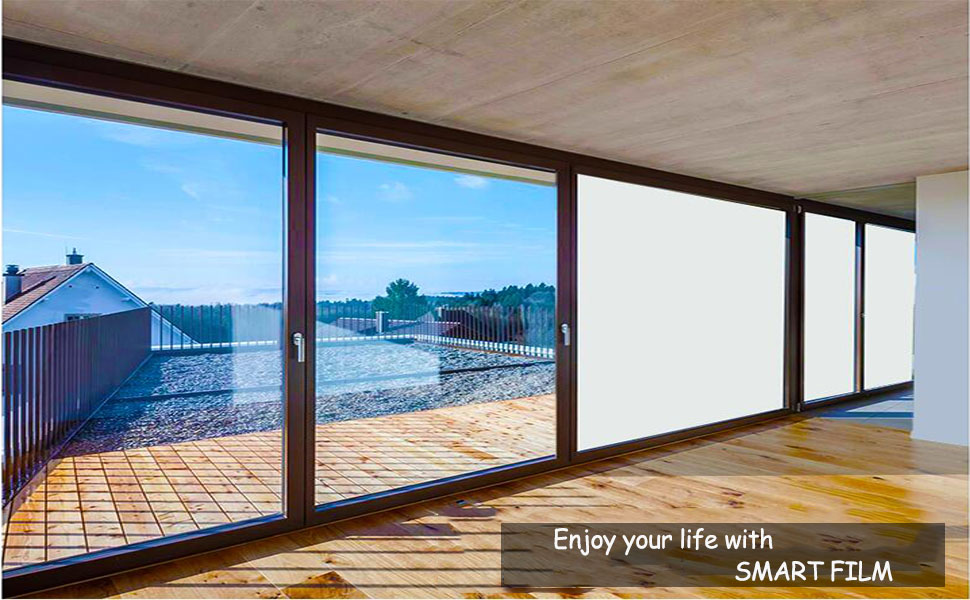
Technical Highlights: Utilizes PDLC technology for rapid 1-second dimming transitions; blocks 85% of mid-to-far infrared radiation; reduces air conditioning energy consumption by 30%; supports green building certification.
Application Scenarios:
Hospital ICUs: One-touch switching between privacy and transparent modes, eliminating bacterial growth issues associated with traditional curtains.
Office Buildings/Hotels: Dynamically adjusts lighting based on usage needs, enhancing spatial comfort and privacy.
Market Impact: Launched a “contactless dimming” solution that replaces traditional curtains as a standard feature for high-end architecture; already implemented in multiple landmark commercial buildings worldwide.
📅 March 2026: Shenzhen JiSu Smart Tech Co., Ltd. leads the global revolution in energy-saving architectural film technology.
Technical Capabilities: Holding over 100 proprietary patents, the company’s smart dimming film products feature:
A light transmission adjustment range exceeding 92% and a response time of <0.5 seconds;
Infrared rejection rates >95% and UV rejection rates >99%;
An equivalent reduction in air conditioning load of 30%–50%.
Market Presence: An 8,700 m² proprietary factory and global joint production bases support an annual production capacity capable of generating ¥300 million in sales; products are exported to 97 countries and regions, serving global clients such as Huawei, Airbus, and Tencent.
📊 Industry Data: Global Smart Film Market Size and Share of Architectural Applications
Market Growth: The global PDLC smart film market was valued at $500 million in 2022 and is projected to exceed $1 billion by 2025, with a compound annual growth rate (CAGR) of over 20%; the Chinese market accounts for more than 40% of the total.
Application Structure: The architectural sector accounts for 40% of the market, making it the largest application segment.
Driving Factors: Driven by global policies on building energy conservation (as buildings account for 46% of total societal energy consumption), Smart Film has become a key material for enhancing building energy efficiency.
🚀 Technological Trends and Future Outlook
Material Innovation: Nanotechnology-based PDLC Films are becoming mainstream, offering lighter, thinner profiles, lower energy consumption, and extended lifespans (exceeding 100,000 cycles).
Smart Upgrades: Integration with IoT and BMS systems enables automatic dimming based on sunlight angles and indoor temperatures, while AI learns user preferences to optimize control strategies.
Self-Powering Technology: Integration of flexible photovoltaic strips allows the dimming film to generate its own power, advancing the goal of zero-carbon buildings.
Market Penetration: Adoption is expanding from high-end commercial buildings to residential housing; the global application area for architectural dimming films is projected to triple by 2030.
Post time: 8 月-04-2026