
Driven by a surge in demand for energy-efficient buildings, flexible workspaces, and smart privacy solutions, the global market for Smart Dimmable Architectural Film is poised for strong growth through 2026. By dynamically adjusting light transmission, this transformative technology enhances energy efficiency and user comfort while reshaping the aesthetics, functionality, and intelligence of architectural design.
Top global market analysts project that the global market for architectural switchable film will exceed $4.7 billion by the end of 2026, with a compound annual growth rate (CAGR) of over 19%. This growth is primarily driven by factors such as the post-pandemic demand for smarter office environments, government policies promoting green and eco-friendly buildings, and technological advancements that have made these solutions more cost-effective and versatile.
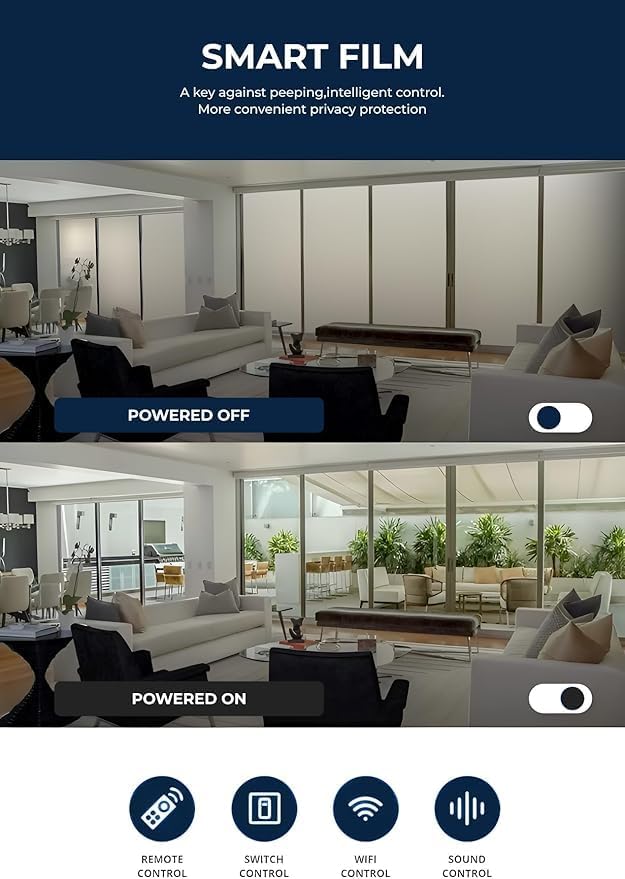
Chinese enterprises like ours have emerged as global leaders in this sector, particularly through innovations that address long-standing industry pain points. For instance, Shenzhen JiSu Smart Tech Co., Ltd. has developed a switchable film for architectural use that boasts industry-leading performance metrics: a response time of under 0.01 seconds, a light transmission rate of less than 3% in the opaque (privacy) state, and over 91% in the transparent (powered) state. Furthermore, this Smart Film( PDLC :Polymer Dispersed Liquid Crystal) has withstood over 220,000 switching cycles, offering a lifespan four times longer than that of comparable traditional products.
Innovations in building material technology are expanding applications beyond traditional privacy partitions and curtains. In commercial office spaces, smart dimming film enables the instant transformation of open areas into private meeting rooms, thereby supporting hybrid work models. High-end hotels are also adopting this technology for bathroom partitions and suite windows; it balances aesthetics with guest privacy needs while significantly saving space and reducing the labor costs associated with cleaning curtains. Furthermore, hospitals and financial institutions are making extensive use of this technology in operating rooms and specialized outpatient areas where confidentiality is paramount.
Government policies and technological advancements are providing strong momentum for the industry. China’s *Development Plan for Building Energy Efficiency and Green Buildings*, alongside global certification systems such as LEED and BREEAM, have incorporated dynamic, tunable light-transmitting materials into their scoring criteria. This policy support is driving real estate developers and property owners to invest in and integrate smart dimming solutions into their sustainable building strategies.
Significant advancements in PDLC (Polymer Dispersed Liquid Crystal) technology are making such solutions increasingly widespread. Through the adoption of novel material technologies and manufacturing processes, traditional limitations—such as high energy consumption and slow response speeds—have been overcome. Modern PDLC films operate at 60V AC (60VAC) with a response time of just 100 milliseconds, while maintaining stable performance across an extreme temperature range of -30°C to 85°C.
The industry has also made significant strides in ease of installation. Innovative technologies, such as self-adhesive films, can be applied directly to existing glass—eliminating the need for full glass replacement and reducing installation costs by up to 60%. This breakthrough opens up new markets for building renovation projects where traditional replacement methods would often be prohibitively expensive or excessively disruptive to daily life.
However, achieving widespread adoption will take time. Market fragmentation and inconsistent product quality remain concerns for buyers. Industry leaders are addressing this by obtaining various international certifications—such as UL, CE, and CCC—to ensure their products meet global quality and safety standards. For instance, products from Shenzhen JiSu Smart Tech Co., Ltd. have secured certifications from six different countries, significantly boosting the company’s expansion into the global market.
Looking ahead, the integration of artificial intelligence (AI) and the Internet of Things (IoT) will further enhance the value of architectural dimming films. Future systems will automatically adjust light transmission based on environmental conditions, user preferences, and energy price signals, thereby creating a truly intelligent, fully automated building ecosystem. These technological advancements will not only improve user comfort and convenience but also contribute significantly to achieving energy-saving goals.
As the industry becomes increasingly stable and mature, competition centering on product quality, stability, and overall performance is intensifying. In this rapidly evolving global market, companies capable of providing “turnkey” solutions—encompassing film supply, installation support, and various intelligent control systems—are steadily establishing a competitive advantage.
Post time: 7 月-10-2026