
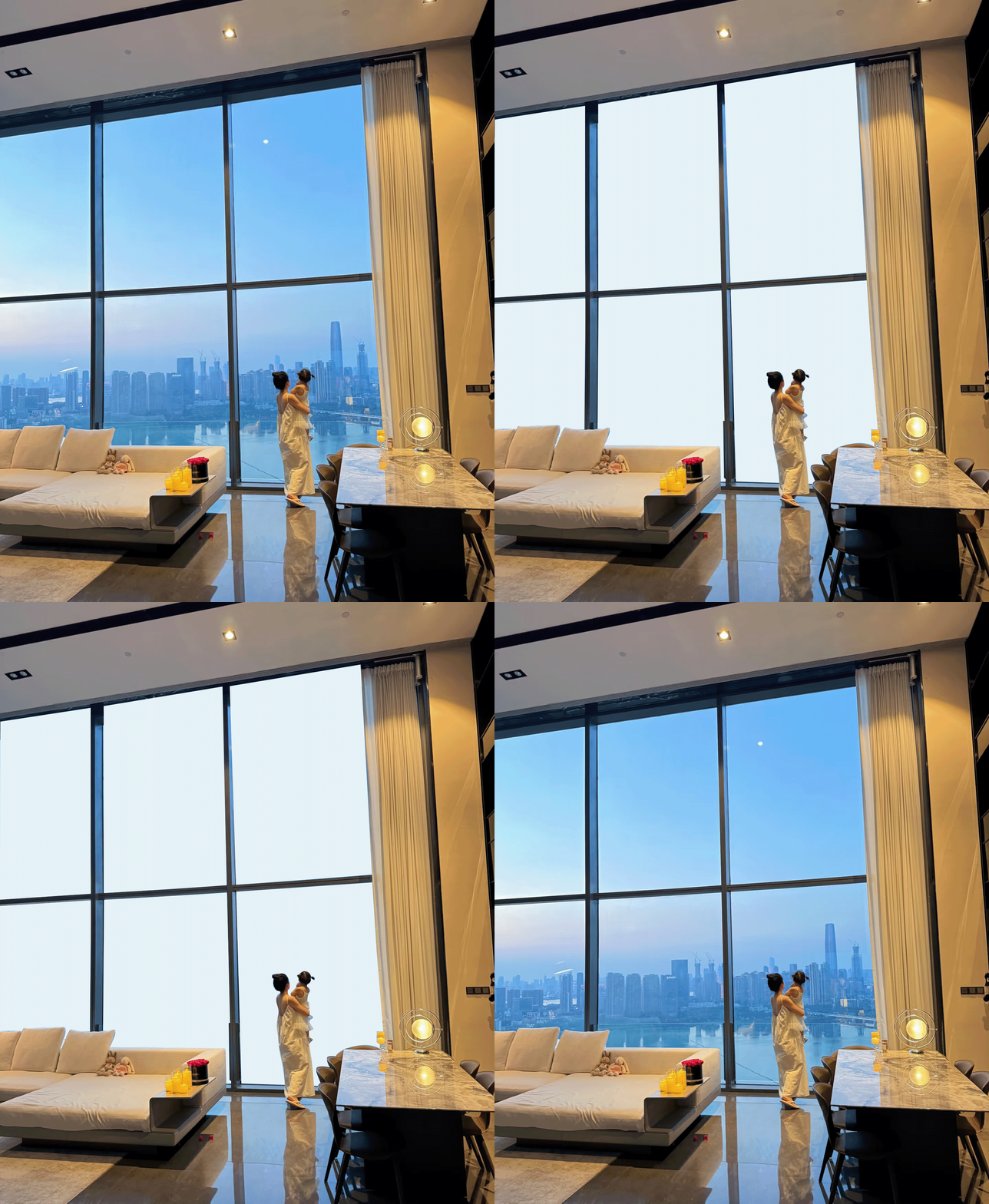
PNLC Smart Film(Polymer Network Liquid Crystal) is also known as adverse PDLC Film. Unlike reqular PDLC Smart Film, PNLC Film operates in
reverse : it turns opaque when powered on and transparent when powered off.
As a revolutionary smart building material, “reverse-mode Dimming Film” has transformed the way light is controlled and privacy is maintained in modern architecture. Unlike traditional Switchable Films—which are opaque when powered off and become transparent when powered on—reverse-mode Smart Film operates in exactly the opposite manner: it is transparent when unpowered and becomes opaque (or frosted) when powered. This unique characteristic, combined with advanced electrochromic technology, makes it an ideal choice, allowing for natural light transmission by default while enabling privacy protection and glare control whenever needed.
In essence, these Dimmable Reverse-mode Films consist of a flexible, thin polymer layer embedded with micron-sized liquid crystals. These crystals are suspended within a conductive matrix, typically made of indium tin oxide (ITO) or another transparent conductive material. When unpowered, the liquid crystal molecules are randomly oriented, allowing light to pass through freely and creating a glass-like, transparent appearance. Upon the application of power, the molecules realign into a uniform configuration that scatters incident light, producing an opaque, frosted effect. This state transition is not only instantaneous but also fully reversible, allowing users to adjust the level of opacity between fully transparent and completely opaque.
One of the key advantages of PNLC Reverse Film is its energy-saving capability. It helps reduce building energy consumption by lowering the need for artificial lighting during the day and minimizing heat transfer through Windows. When the film is in its transparent state (powered off), it allows natural light to illuminate interior spaces, thereby reducing reliance on electric lighting; conversely, when switched to the frosted state, it acts as a passive thermal barrier, blocking solar radiation and easing the load on air conditioning systems. Research by the R&D team at Shenzhen JiSu Smart Tech indicates that Buildings utilizing Smart Dimmable Film can achieve energy savings of up to 30% compared to those with conventional windows, making it a significant, sustainable choice for green building projects.
This PNLC Reverse Film(Polymer Network Liquid Crystal) outperforms many alternatives in terms of ease of installation and application flexibility. The film can be applied directly to existing glass surfaces, eliminating the need for costly window replacement projects. It is suitable for both residential and commercial buildings and is available in any size, including custom shapes for irregular configurations. Whether used for office partitions, hotel guest rooms, hospital privacy windows, or residential bathrooms, it integrates seamlessly with existing architectural designs. Furthermore, the film is compatible with smart home systems, allowing users to control it via smartphone apps, voice commands, or automated sensors that adjust transparency based on ambient light levels or occupancy.
Another notable feature is its positive impact on the comfort and well-being of occupants. Traditional blinds or curtains often obstruct the view, creating a sense of confinement; in contrast, switchable privacy film ensures privacy while maintaining a visual connection to the outdoors, enhancing the sense of spaciousness and offering easy maintenance. This unique ability to safeguard privacy while preserving natural light is particularly advantageous in densely built urban environments. Furthermore, the film filters out harmful UV rays—preventing the fading of furniture, artwork, and flooring over time—while allowing beneficial natural light to enter the interior.
Durability and low maintenance requirements are also significant advantages. High-quality PNLC Reverse Film(Polymer Network Liquid Crystal) are specially designed to withstand daily wear and tear, offering features such as scratch, water, and shatter resistance, as well as thermal insulation, noise reduction, and UV protection. Beyond routine surface cleaning, no additional maintenance is required; with proper use, the film boasts a lifespan of 12 to 15 years or even longer. Unlike mechanical blinds, which are prone to damage or misalignment, this film contains no moving parts—thereby minimizing the need for repairs or replacements and greatly enhancing overall quality of life and user experience.
In commercial settings, PNLC Reverse Film(Polymer Network Liquid Crystal) significantly enhances operational efficiency and flexibility. Meeting rooms can instantly switch between open-plan spaces and private conference areas with the simple flip of a switch, while large retail stores can use the film to display advertisements, flexibly adjusting content based on the time of day or promotional needs. In healthcare facilities, the ability to switch states on demand protects patient privacy during examinations while allowing medical staff to monitor patients without entering the room. For hotels, it enables guests to easily adjust room privacy—eliminating the need for cumbersome curtains—thereby significantly improving the overall guest experience.
With the continuous research, development, and innovation of Smart Building Technologies, PNLC Reverse Film(Polymer Network Liquid Crystal) has come to play a pivotal role. Future technological advancements may include integration with energy management systems to optimize light transmission based on real-time weather data, or the development of self-cleaning films that further reduce maintenance requirements. By combining functionality, energy efficiency, and aesthetics, dimmable reverse film serves not merely as a building material, but as a cornerstone of smart, user-centric architectural design.
Post time: 5 月-29-2026