
🌄 Outdoor LED Display: A Professional Introduction
Outdoor LED displays are robust, high-performance visual communication systems engineered to deliver clear, vibrant content in open-air environments. Built to withstand harsh weather conditions and varying light intensities, they have become a cornerstone of outdoor advertising, public information dissemination, and event visualization.
⚙️ Core Design & Working Principle
Unlike indoor counterparts, outdoor LED displays feature enhanced hardware and structural designs. The core light source remains RGB LED chips, but they are encapsulated in weather-resistant materials to shield against dust, moisture, and extreme temperatures. Advanced driving circuits and brightness auto-adjustment technology ensure optimal visibility—automatically dimming in low light and boosting brightness under direct sunlight, with peak brightness often exceeding 5000 nits. The display’s control system supports real-time content updates via wired or wireless networks, enabling dynamic and flexible information delivery.
💪 Key Advantages
- Weather & Durability: IP65 or higher waterproof and dustproof rating, capable of operating in temperatures ranging from -40°C to 60°C, resisting wind, rain, snow, and UV radiation.
- Ultra-High Visibility: High brightness output and anti-glare technology ensure clear readability even in direct sunlight, making content visible from hundreds of meters away.
- Long-Term Cost Efficiency: With a lifespan of up to 100,000 hours, low power consumption, and minimal maintenance requirements, it offers a high return on investment for long-term outdoor deployment.
- Scalability & Flexibility: Modular design allows for easy expansion or modification of display size and resolution. Supports seamless splicing to create large-scale video walls for landmark locations.
- Dynamic Content Capability: Supports real-time video, animations, text, and image updates, enabling targeted advertising, emergency notifications, and live event broadcasts.
🎯 Typical Applications
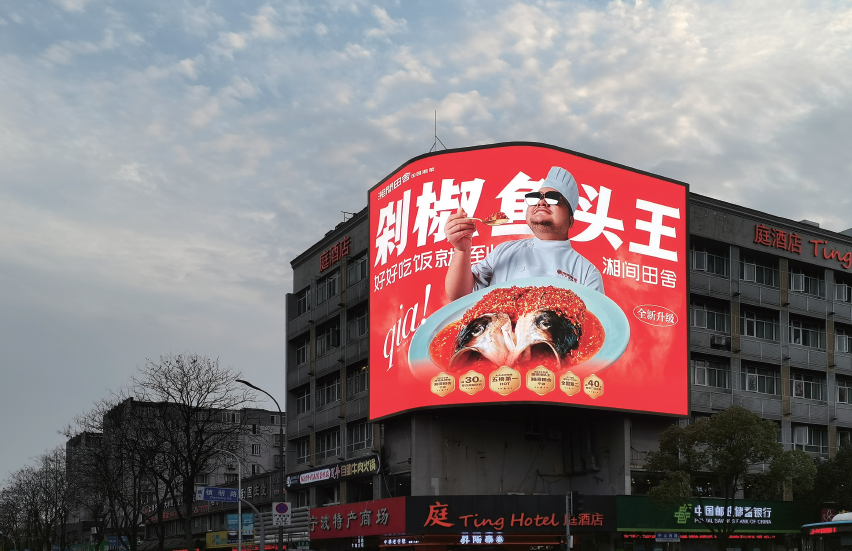
- Outdoor Advertising: Dominates urban landscapes on billboards, building facades, and street-side structures, capturing audience attention with dynamic, eye-catching content.
- Public Information: Used in transportation hubs (airports, train stations, bus terminals) for flight/train schedules, traffic updates, and safety announcements.
- Event & Stadium Displays: Serves as giant scoreboards, live broadcast screens, and background visual platforms in sports stadiums, concerts, and large-scale public gatherings.
- Urban Landmark Projects: Integrates with architectural designs to create iconic nighttime visual attractions, enhancing cityscape aesthetics and brand image.
📐 Critical Technical Specifications
- Pixel Pitch: Ranges from P3 to P20+; larger pixel pitch is suitable for long-distance viewing (e.g., highway billboards), while smaller pitch offers higher resolution for close-range applications (e.g., street-level displays).
- Brightness: Typically 5000-10000 nits, with automatic brightness adjustment based on ambient light sensors.
- Protection Rating: Minimum IP65 for front and rear panels to ensure weather resistance.
- Refresh Rate: 1920Hz or higher to eliminate flicker and ensure smooth video playback, critical for capturing clear images in fast-paced environments.
Summary: Lightweight, Fast, Economical, Stable
Product Features:
1. Uses high-quality SMD LED light source
2. Excellent craftsmanship, stable and reliable
3. Energy-saving circuit design, low power consumption
4. Rigorous waterproof testing, quality guaranteed
Post time: 3 月-12-2026